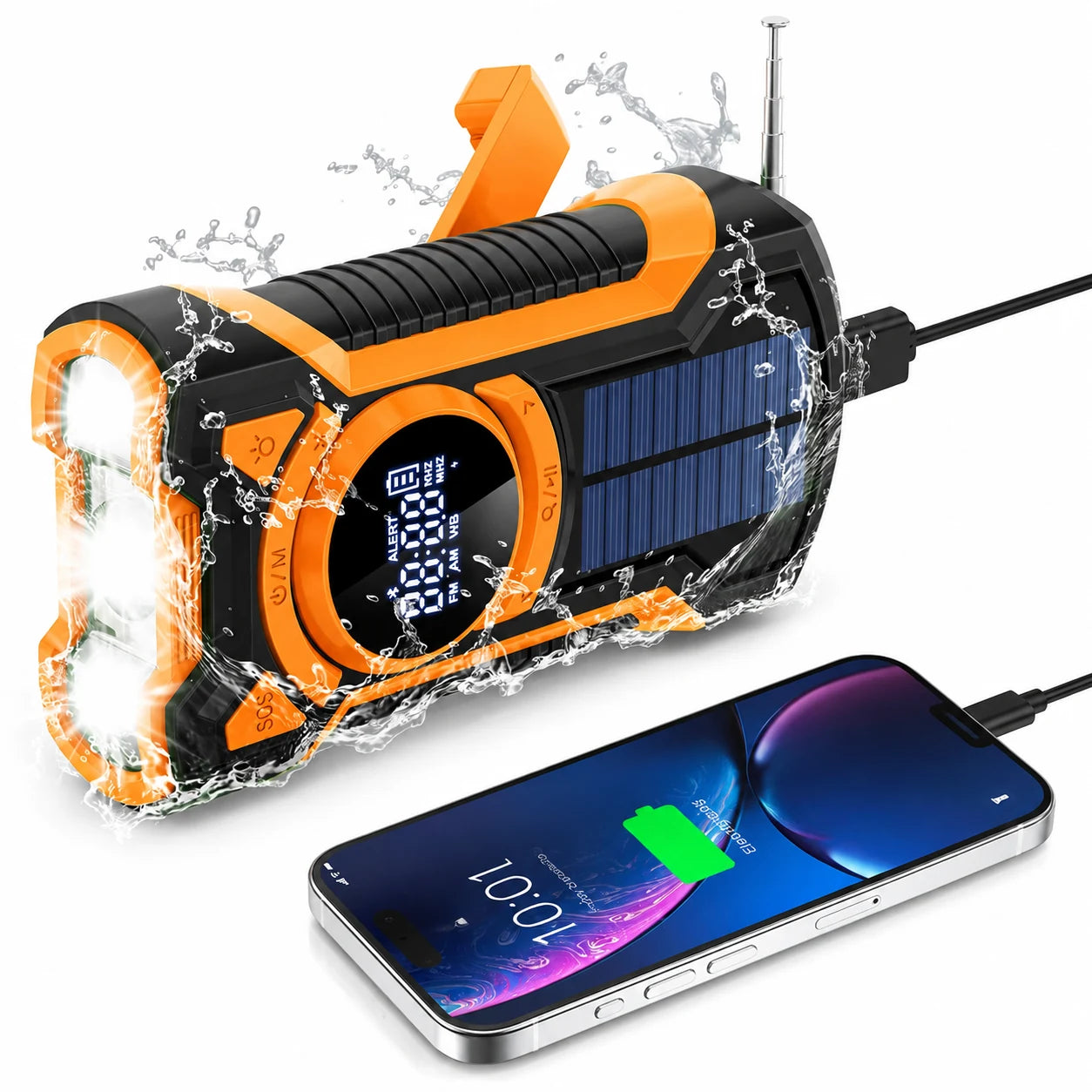
Everything You Need When It Matters Most
Never Dead When the Storm Hits
Solar, hand crank, and USB-C keep StormReady charged through 6+ weeks in standby. Pull it mid-hurricane and it works — no frantic cranking.
Alerts Only for Your County
Program your county code once and StormReady monitors 7 NOAA bands silently. Only your area's warnings trigger the alarm — never distant false alerts.
Built Tough, Built to Last
Survived 7-foot drops and sustained rain without losing a function. StormReady holds up where cheap plastic radios crack and quit.
One Device, Five Functions
Radio, flashlight, charger, SOS alarm, and NOAA scanner — five tools in one unit. StormReady covers every emergency need without extra gadgets.
What our 17,000+ Customers say
Based On Real and Honest Experiences
Frequently Asked Questions
How long do I need to crank it to actually get any radio time?
About 60 seconds of cranking gives you 10–26 minutes of radio time. StormReady charges via USB-C and solar first; the hand crank is a last-resort backup. Most owners charge fully at home and rarely need to crank at all.
Can StormReady charge my smartphone?
Yes. StormReady's USB output lets you charge phones directly from the built-in battery. In testing, it delivered around 50% charge to a smartphone — enough for multiple emergency calls or to coordinate with family.
Is it actually waterproof, or just splash-resistant?
StormReady carries an IPX5 waterproof rating, meaning it can handle sustained water jets, heavy rain, and wet outdoor conditions. It's built for real-world use, not just light drizzle.
How does the automatic weather alert work?
Program your SAME county code once and StormReady silently monitors all 7 NOAA frequencies. When a tornado or flood warning hits your specific area, it sounds a loud alarm and flashes its light — waking you even if the volume is low.
Is the alarm loud enough to wake me up if a warning comes in the middle of the night?
StormReady's NOAA alert produces one of the highest decibel outputs tested — reviewers call it jump-out-of-seat loud. It also triggers a simultaneous strobe, so even heavy sleepers get both a sound and a light signal when a warning hits your county.
Will it pick up NOAA alerts clearly in a basement or building with bad reception?
In testing, StormReady picked up NOAA alerts clearly from a basement — some background static, but every warning audible. For metal buildings or very remote areas, the external antenna jack significantly boosts reception.
What happens if the built-in battery eventually dies — can I still use it?
Most StormReady configurations include a backup AA or AAA battery slot — so if the built-in battery ever depletes, pop in store batteries and keep going. That layered redundancy means no single point of failure, even years down the road.
How do I set it up for my county so I only get local weather alerts?
Setting up local alerts takes about 2 minutes: enter your county's SAME code (a 30-second lookup at weather.gov) and confirm. StormReady then monitors only warnings for your exact area — no false alarms from hundreds of miles away.