Why Gardeners Who Already Returned A $15 Probe Stick With This One
0.1 pH Reading Resolution
Reads in tenths, not whole numbers. The same resolution your state extension lab reports — so amending decisions actually match the ground truth.
2-Point Buffer Calibration
Buffer powder included for pH 4.01 and 7.00. Calibrate at the start of each season and the meter agrees with the lab within 0.2 points.
Replaceable Spear-Tip Probe
Hardened tip survives clay and rocky soil. When it dulls in season 2 or 3, swap the tip — not the whole meter. $9 replacement vs $40 for a new unit.
Four-In-One Sensor Pen
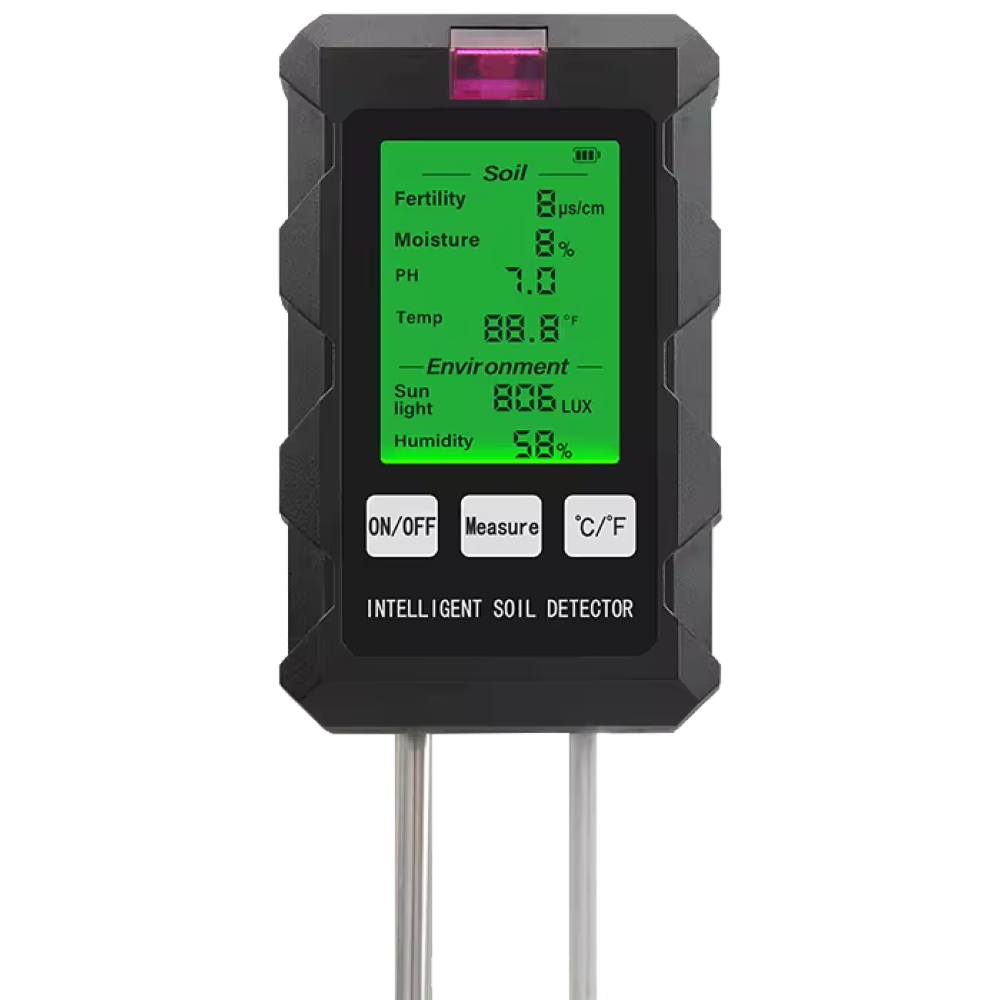
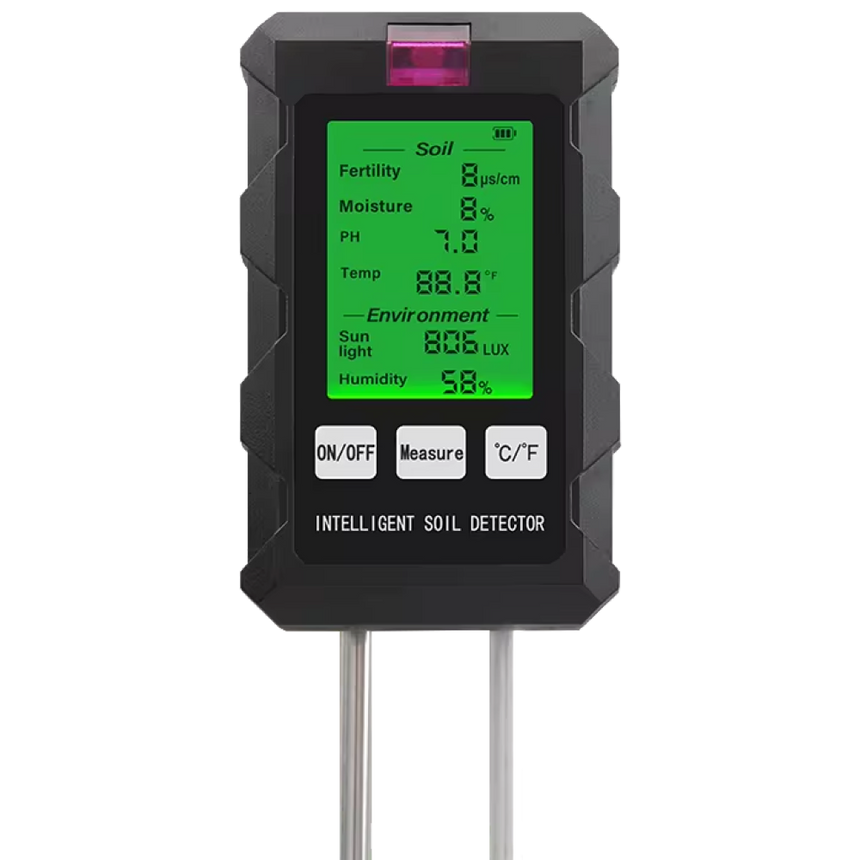
pH, soil moisture, ambient light, and soil temperature on one backlit display. One walk-around handles raised beds, lawn, and houseplants.
What our 17,000+ Customers say
Based On Real and Honest Experiences
Frequently Asked Questions
How accurate is RootGauge compared to a state-extension lab test?
After 2-point calibration with the included buffer kit, RootGauge reads within 0.2 pH units of mail-in lab results — the same accuracy benchmark editors reported for $100+ pen meters. Tight enough to drive lime and sulfur decisions.
Why does my old $15 probe always read 7.0 — and is RootGauge different?
Cheap analog meters use a galvanic needle that pins at 7.0 in dry soil and rarely moves regardless of actual pH. RootGauge uses a calibrated digital sensor that updates every 5 seconds and reads to 0.1 — confirmed against pH 4.0 and 7.0 buffers.
How often does it need to be recalibrated?
Calibrate once at the start of the growing season with the included pH 4.01 and 7.00 buffer powders. During heavy use (5+ beds weekly), recalibrate monthly. Off-season, every 60 days is enough — the process takes about 90 seconds.
Will the probe survive clay or rocky garden soil?
The spear tip is hardened steel, not the plated tin on $13 analog probes that bend on first insertion. For very hard clay, pre-water the bed and push the probe straight down — never twist. Replacement tips are $9 when the original wears.
How long do the batteries last?
On 2 AAA batteries with auto-sleep enabled, expect 4-6 months of regular use (10-20 readings per week). The screen dims after 30 seconds and shuts off after 2 minutes. No Wi-Fi, no app sync — power use is only during an active reading.
Can I use it indoors for houseplants and seedlings?
Yes — the 0.1 resolution and built-in moisture sensor are useful for fiddle-leaf figs, monsteras, and seedling trays where overwatering is the #1 killer. Push the probe 1-2 inches in for small pots, 3-4 inches for larger containers.
Does it work for blueberries, hydrangeas, and other acid-loving plants?
Particularly useful here. Blueberries want pH 4.5-5.5; hydrangeas turn blue at 5.5 and pink at 6.5. The 0.1 resolution lets you actually hit those windows when applying sulfur. The built-in plant database lists target pH for 200+ varieties.
Are the moisture, light, and soil-temperature readings accurate too?
Moisture reads on a 1-10 scale (1=dry, 10=saturated) — gardener-friendly, not precise volumetric water content. Light is in lux, useful for comparing spots in a yard. Soil temp reads in °F to within 1 degree — useful for seed-starting timing.