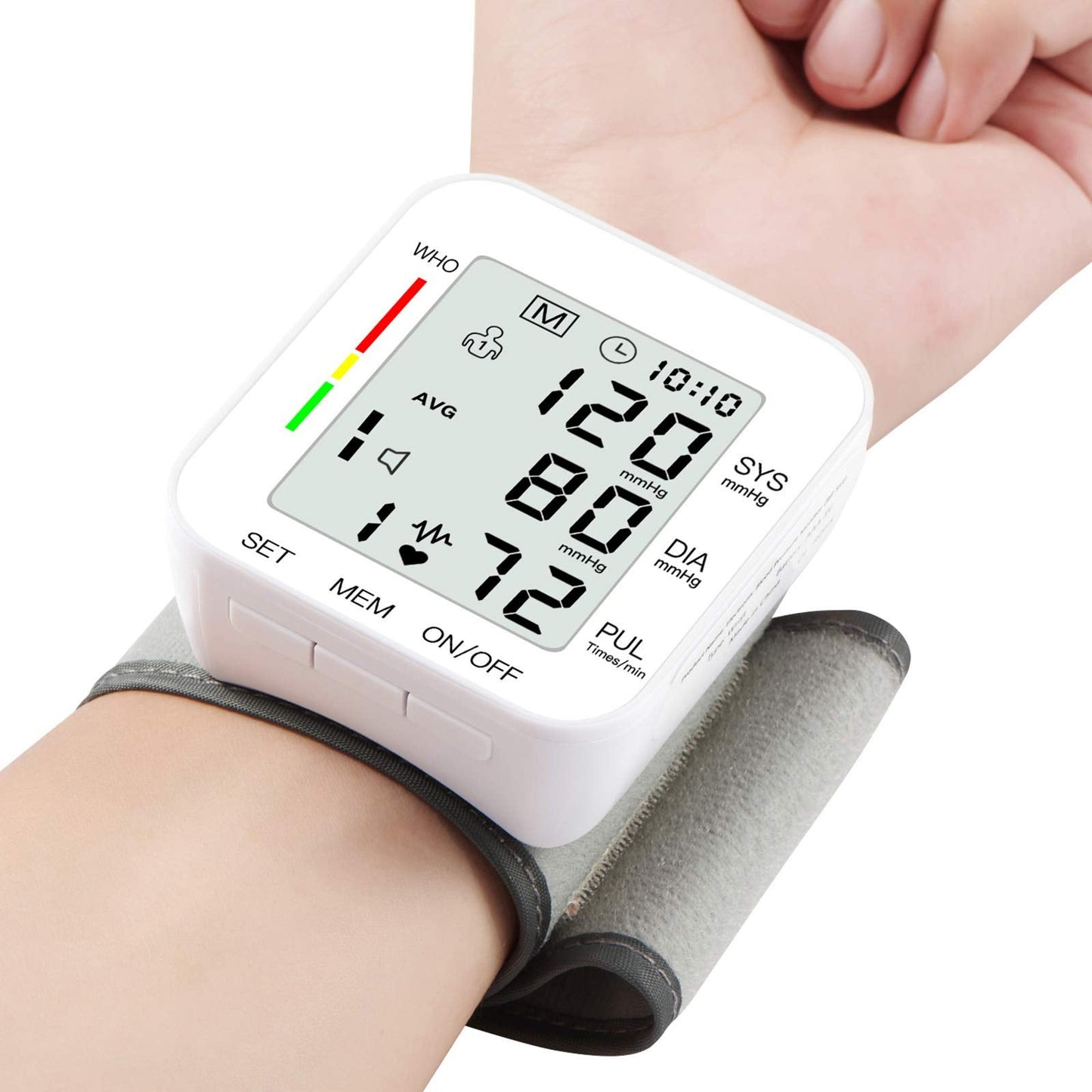
Why PulseIQ Readings You Can Actually Trust
Sensor Stops Wrist Position Errors
PulseIQ's built-in positioning guide confirms heart height before every reading. This eliminates the 5-10 mmHg error wrist drift causes.
Voice-Guided Measurements
Every step of the measurement process is narrated aloud, and your final result is announced clearly — no screen required. Designed for independence, especially for users with visual challenges.
Irregular Heartbeat Detection
PulseIQ automatically flags irregular cardiac rhythms during every measurement. Catching an anomaly early means you can consult your doctor before a small concern becomes a serious issue.
Dual-User Memory Profiles
Two separate profiles each store 99 timestamped readings, keeping your data clean and your partner's data separate. Spotting long-term trends for two people has never been this organized.
What our 17,000+ Customers say
Based On Real and Honest Experiences
Frequently Asked Questions
How does PulseIQ compare in accuracy to devices used in a doctor's office?
Most wrist monitors read 5-10 mmHg too high because the wrist drifts below heart level. PulseIQ's positioning guide fixes that before every reading, keeping results within ±3-5 mmHg of arm cuff standards.
How do I use PulseIQ correctly to get accurate readings?
Wrap PulseIQ snugly on bare wrist, display inward. Sit quietly 5 minutes, raise arm until the guide confirms heart level, then press the button and hold still 45 seconds. Take two readings two minutes apart for best accuracy.
Why does my reading change if I take it twice in a row?
Readings vary from movement and wrist drifting below heart level — even 3-4 inches low shifts systolic by 5-10 mmHg. PulseIQ's positioning guide removes that variable. Rest 5 minutes and take two readings two minutes apart for reliable trends.
Is a wrist monitor as accurate as an arm cuff?
Arm cuffs cause real problems for people with arthritis or large arms. A wrist monitor used at correct heart height tracks within ±3-5 mmHg of arm cuff readings. PulseIQ's positioning guide ensures that condition is met on every reading.
Will it alert me if my heart rhythm seems off?
Yes. PulseIQ runs an automatic cardiac rhythm check with every single reading. If an irregularity is detected, you'll receive an immediate on-screen and audio alert so you know to follow up with your healthcare provider promptly.
How long does PulseIQ last before I need to replace it?
Long-term users report consistent PulseIQ performance after 12-24 months of daily use — far beyond the 3-6 month lifespan typical of cheap generic monitors. It is built for repeated daily readings, not occasional use.
Why not just buy an Omron or a cheaper Amazon monitor?
Omron spends heavily on retail marketing — PulseIQ invests in accuracy: heart-level positioning and validated sensors. Users report PulseIQ matches Omron readings for daily trend tracking at a fraction of the price.
How do I know if my home readings are actually correct?
Compare a PulseIQ reading to your next doctor visit — users report matching within 5 mmHg when the positioning guide is used correctly. Take two readings two minutes apart; consistent results confirm good technique.